
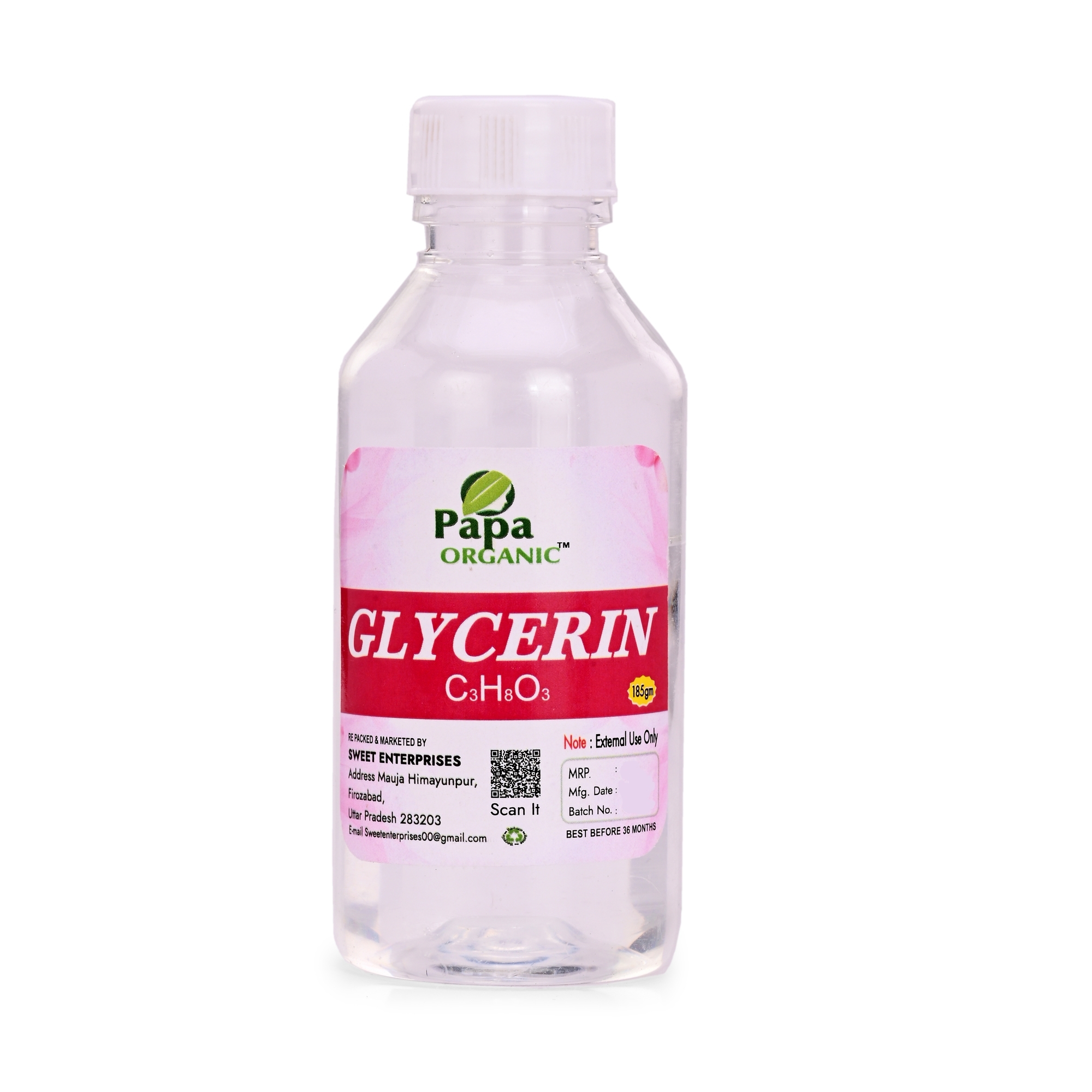
Glycerin (also known as glycerol or glycerine) is a simple polyol compound that is widely recognized as one of the most versatile ingredients in the world. It is a natural byproduct of the soap-making process and is found in everything from your morning toothpaste to industrial-strength anti-freeze.
Physical & Chemical Profile
Appearance: A clear, colorless, and odorless liquid.
Texture: Thick, syrupy, and highly viscous.
Taste: Notably sweet (roughly 60% as sweet as table sugar).
Chemical Formula: $C_3H_8O_3$.
Key Characteristic: It is hygroscopic (a humectant), meaning it acts like a magnet for water, pulling moisture from the air or deeper layers of tissue to the surface.
Common Applications
1. Skincare & Cosmetics
Glycerin is the “gold standard” humectant. It is used in lotions, serums, and soaps to:
Hydrate: Draw moisture into the skin to prevent dryness.
Repair: Strengthen the skin’s natural moisture barrier.
Soothe: Calm irritation and soften the texture of rough patches.
2. Food & Beverage Industry
Because it is non-toxic and sweet, it is used as:
Sweetener: A low-glycemic alternative to sugar.
Preservative: It prevents food from drying out and inhibits the growth of certain molds.
Texture Enhancer: Provides a smooth “mouthfeel” in low-fat foods and liqueurs.
3. Medical & Pharmaceutical
Cough Syrups: Acts as a demulcent to coat and soothe an irritated throat.
Wound Care: Used in medical dressings to keep wounds moist for faster healing.
Laxative: Often used in suppository form to treat constipation.
4. Industrial Uses
Anti-freeze: Used in automotive and airplane systems to prevent freezing.
Plasticizer: Added to plastics and paper to make them more flexible and less brittle.

Reviews
There are no reviews yet.